Bonfires Of The Billy Bullies

Fire festivals are part of Ireland’s sacred heritage. But not these fires.

July 12th. The peak of the marching season. The annual celebration of the day in history, 1690 to be exact, when the Irish were defeated by William of Orange in the Battle of the Boyne.

July 12th. The annual opportunity for northern loyalists, also known as the Orangemen or Billy Bullies, to drive home the point with marches through Catholic neighborhoods. Marches and fires.

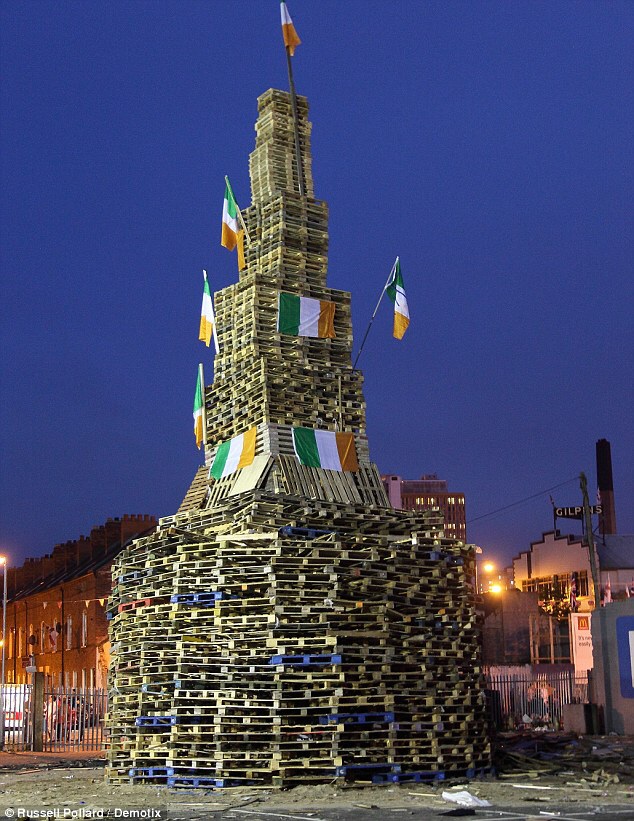
On July 11th seventeenth century loyalists to the crown lit fires along the banks of the river to show William the way to the battle. On July 11th modern day loyalists also light fires. Last year they burned a large photo of a young priest who had recently committed suicide. This year they raided a Catholic memorial to steal a statue of the Virgin Mary for the pyre. Flags of the Irish Republic and other icons are standard fuel for these fires.
image

This past weekend’s events are reported to have been more peaceful than in past years. For many ‘the troubles’ as they are called here have faded a bit. Yet for others the angry fires are kept alive. In the past couple of years the Orangemen have applied for permission to bring the marches out of the north and into Dublin. When permission was denied they just brought the marches anyway. They didn’t get far. Dubliners turned out en masse to turn them back. And without violence. As a friend said, “They just came out all together and told the Billy Bullies to piss off.”

Yesterday Jack and I were talking about the generally peaceful nature of the Irish people. It’s part of their heritage. Their spiritual ancestors are known as the People of Peace. It’s a countenance of peace tempered by deep grief. It’s a light of peace diminished by the persistent fires of the Billy Bullies.
Blood Healing

Blood healing. Under “b” in the address book. It’s where he kept and still has the name and number of the woman in County Antrim that Brendan relied on for livestock healing. The woman has died, but the number remains.

I stepped into the kitchen to give Brendan a copy of my book, mentioning that it includes the story he told me about this woman healer he called for healing his cows. Two of his now grown children home for the holiday weekend were in the kitchen and reacted with raised eyebrows and indulgent smiles. Brendan backed me out of the kitchen and closed the door behind him. Perhaps to keep me out of the kitchen, more likely to keep the kitchen out of our conversation.

“Yes, the cows,” he said. “But did I tell you about the sheep?”

When I shook my head he continued. “Well the cows was just that one time. But the sheep are a different story altogether. You see for a long time around here the sheep were always getting Orf. Mouth sores that were highly contagious and not good for the lambs. Most other farmers took to inoculation, but I generally just took my chances. And when I discovered that my sheep had Orf, I would ring this woman. Every year it was at that time. And I would ring this woman. She never said ‘hello’. She just barked through the phone, “What’s wrong?!?” I would tell her and she would make sure I had the number of sheep correct. Then, without saying another word, not even ‘goodbye’, she would slam down the phone. And the sheep would be cured. And her number is still there in the personal phone book. Under ‘b’ for blood healing which was the situation with the cows.”

Over the next few days of our stay at Serenity B&B Brendan’s reaction to my book would unfold in bits and pieces. And it would be no surprise to me that of great interest to him are the stories of Biddy Early, the most famous healer wise woman of Clare.


Of Tea And Tragedy

Closing our visit to the Deserted Village we made our way to John and Margaret’s for a cup of tea before heading back to our Spiddal lodging. For people we had only met once, and in a pub, they were thoroughly gracious and welcoming. Such is the way of Irish hospitality.

They had both grown up in this part of the island and raised their three children in this home surrounded by family. Margaret’s brother and father live in nearby houses, other family live just up the road. It is a delightful cottage that has rarely if ever welcomed American visitors and it seems we had to navigate a few stereotypes. The first several minutes of our visit were taken up with John and Margaret apologizing for how small their home is and my assuring them it is much larger than mine and entirely lovely. There were also apologies for the laundry in the bathroom and the general mess of the place, as they characterized it. It wasn’t messy. Just lived in.

Margaret excused herself to prepare the tea leaving John alone with Mia and me in their cozy sitting room complete with turf fire. An eager host he was nonetheless a bit at loose ends as to what to do with us. When I glanced at the fireplace mantle with the line of framed family photos he jumped to his feet and showed us every photo on the mantle and in the room. Photos of their three kids now making their ways in the world. And a photo of a young man in his forties dressed in jeans and a hoodie. As John handed us the photo he said it was Margaret’s brother-in-law who had committed suicide just three months ago. Mia and I sat in stunned silence as we held the framed photograph.

It wasn’t so much the fact of his suicide. I have known for years that suicide is epidemic in this country. Every year when I come over I quietly inquire if this is still the situation and every year I am told it’s actually getting worse. I have learned to be very careful around this subject because it seems so many have been touched by this tragedy. It’s the young people and more predominately the men. There is such desperation here and while a factor of the current economic situation it seems to go much deeper.

So it wasn’t the fact of his suicide that struck me. It was the profound intimacy in the sharing of it in the midst of a conversation of strangers getting acquainted while we waited for tea and biscuits. It was the anguished look in John’s eyes as he handed us the photo.

Where is the healing for this land? For these people?

As I finish this writing, sitting in a sea-side cafe, Lean on Me just came through the sound system. We all need somebody to lean on.


Deserted Village

Before coming to Ireland my teacher had told me to open to the wisdom and guidance of the spiritual ancestors. To listen for the invitation to step away from my very familiar itinerary and go places that would offer important encounters with people and places on this Ireland journey. The invitation to Achill Island came in a pub on our first night in Ireland, an invitation extended by a delightful couple to visit their island home. Apparently the ancestors weren’t going to waste any time. I had never been to nor considered going to Achill Island. I mentally rearranged our schedule and agreed to see John and Margaret the following Sunday.

As we made our way north Sunday morning I admit I did wonder what could possibly be waiting at the end of this long drive to a remote island with no specific destination when we got there and only a few hours of exploration before the long drive back to our B&B lodging. When we crossed the bridge to the island we just drove, waiting for our tea time with John and Margaret. Wandering, really. And it felt altogether aimless. Until we saw the sign to the Deserted Village. I knew immediately. This is why we had come. With a silent apology for doubting the invitation I pulled into the car park.

image

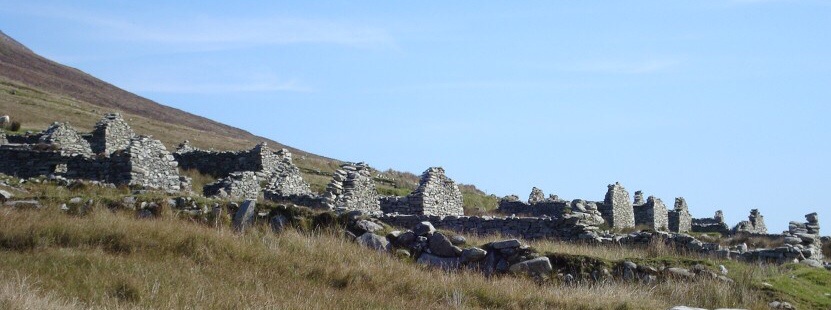
They were scattered in long lines, their end walls standing against the hillside like so many headstones. Stone houses long ago abandoned. Some say eighty. Some say as many as one hundred. But those are only numbers. Each of these small cottage remnants sheltered a family of parents and grandparents, aunts and uncles, and children. Loads of children.

I walked the line until one called me. I ducked under the stone lintel over the low doorway and sat among the grasses and reeds. Immediately there was a wave of grief. Woman’s grief of losing home, hearth, and community. A way of life lost when this entire landscape was taken by the English and given to a family of the crown to manage at their will. And their will was eviction. Such deep sadness still held by these stones.

I had come to Ireland to deepen my understanding of an aspirational heritage of spiritual wisdom. As I sat in the abandoned cottage I realized the importance of more deeply understanding a heritage of loss and suffering.


A Soft Landing

So. It’s not that I haven’t been writing. Just not the blog. Not forgotten, but resting until the book was published. A Legacy of Wisdom: The Genius, Power, and Possibility of Ireland’s Indigenous Spiritual Heritage. A long sub-title although it really says it all. Some have suggested after that sub-title the book is superfluous.

So now in Ireland with the book – or rather several copies of the book. Something of a soft book launch as it turns out. Soft is the operative word. I have copies for the many folks here who gifted me some of the stories I included in the book. Many are Catholic. And frankly the Catholics don’t do well in the book. Better than the English by a long shot. But not well. And there is a delicate dance to be done in sharing the book with these folks.

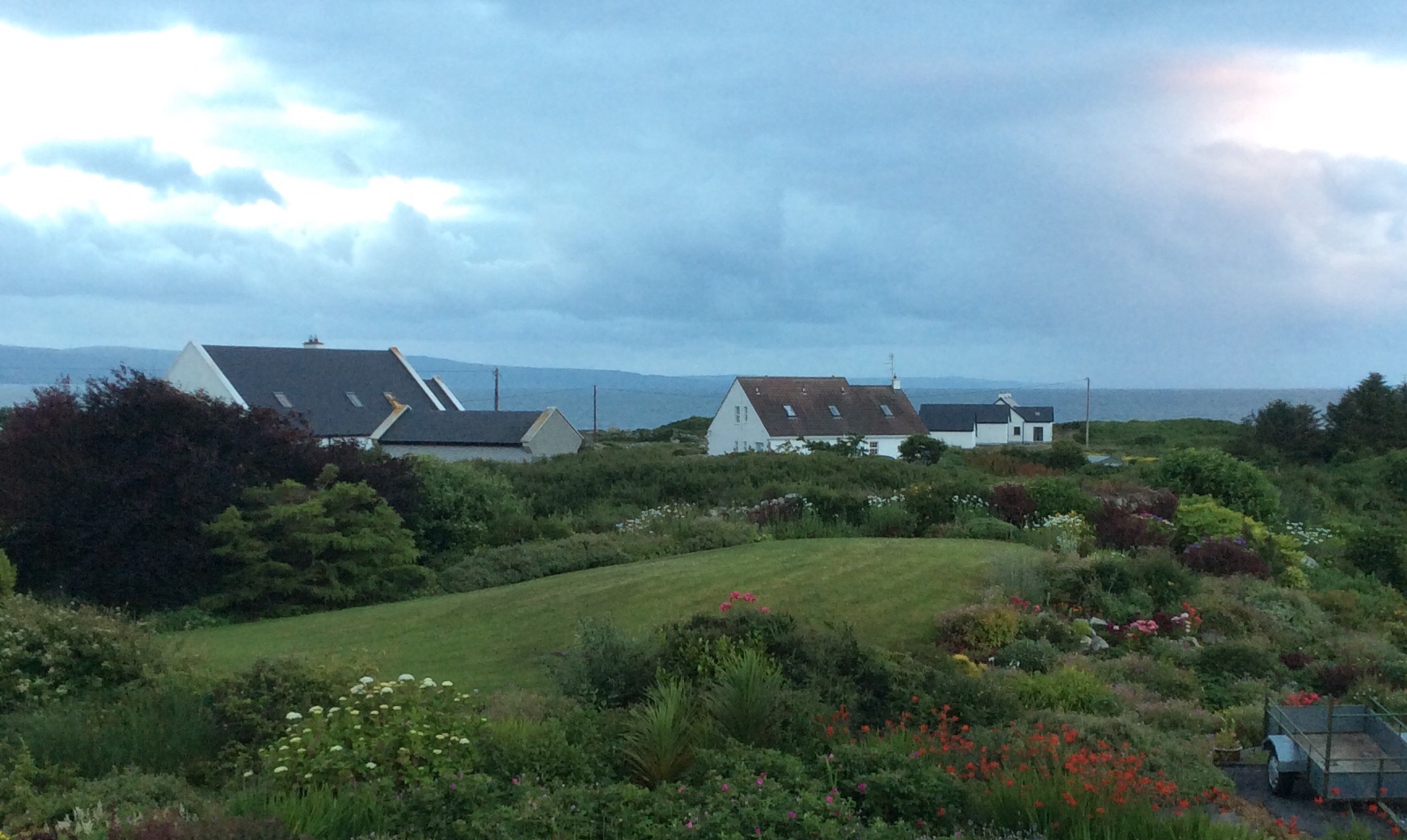
Our B&B hostess in Spiddal had asked to see a copy and ironically when I ventured into the kitchen to find her I discovered she was at Mass. Hmmm. However what an amazing conversation we had when she returned and wandered down to our room. Our room with this view of her back garden and Galway Bay.

Galway Bay

As Vera turned the pages I gave her a brief overview of some of the book, trying to touch on the more aspirational aspects of the writing. Yet she turned immediately to the part on Catholics and now we were talking about the conflict of being Catholic in a country where the Church inflicted so many abuses. Abuses that are kept very alive and present with the recent finding of so many baby bodies discovered in a septic tank. She talked about how these things of the past should really be left in the past. Because there is nothing we can do about it. Because the Irish need to move on.

And then came the stories of the Black & Tan troops that moved through the country side killing people for any perceived infraction or for no infraction at all. And the stories of the English stealing their land and language. And the songs of the Irish that are so filled with laments for lovers killed and lost. Yet all of those songs are really code for the loss of Ireland. Songs sung about her and for her.

In listening to Vera I began to understand that before the Irish can embrace an aspirational future they must heal their past. Their loss and agony. There is much to be healed in this land. And that will be the subject of subsequent posts.