A Promise Of Passion. A Heart Of Compassion.

Colm was thrashing around in the back seat as we sat in the empty car park outside the pub. He was invoking the holy family. Praying to, pleading with them that we were in the wrong place at the wrong time. Maybe we got the wrong night. poitin stil 4Maybe we got the wrong location. Maybe we should just go home. From the driver’s seat Maureen murmured calm yet firm assurances that no, we were just early.

To be accurate the car park wasn’t completely empty. There was one other car with doors open as a woman tried to fold her very elderly and incredibly inebriated father into the back seat. He wasn’t having it and after much kicking and struggling he staggered back to the pub’s front door. She drove away in exasperation. We had been sitting in stupefied silence watching this scene but when the daughter was gone and the father had stumbled back into the pub the thrashing started again. “Jesus, Mary and Joseph be good to us. Maybe they cancelled the party at the last minute. Let’s go home, Maureen.” Continue reading

A Tenacious Tribe

The men sang as they walked in procession from the campsite to the ceremonial grounds. We were lined up waiting for them. They told us later that as they approached they couldn’t recognize us, couldn’t distinguish us one from another. Not surprising, I suppose. We were wearing every piece of clothing we had with us and were wrapped in blankets and sleeping bags. Sacred lumps of the divine feminine, they called us.

The men arrived to dance, sing and pray throughout the day as we women had danced, sang and prayed throughout the night in the high deserts of Idaho. And it had been cold. The lamp oil had frozen solid in the lighted tiki torches that circled the dance ground and so we danced by starlight, moccasined feet on frosty ground.

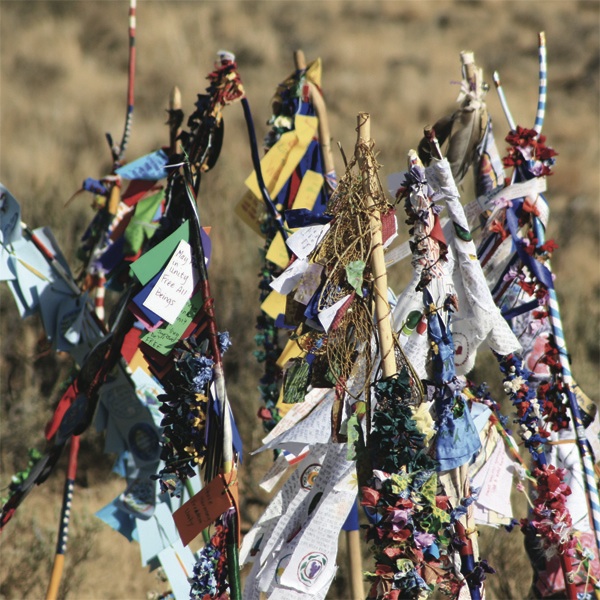
Singing and dancing and praying. It’s what we do in this spiritual community, this sacred tribe. We sing and dance and pray throughout the year and every fall equinox we gather prayer flagstogether for days of ceremony. Sometimes in sleet and snow, and winds and rains that threaten to carry away our tents. Sometimes in temperatures over 100 degrees farenheit. Sometimes in lightening and thunderstorms when there is no space of waiting or counting between the thunder booms and lightening flashes.

For each event there is much preparation. Some years each of us making thousands of prayer ties to decorate the ceremonial grounds. Some years folding thousands of paper cranes with a prayer written inside each bird. Every year creating sacred songs and dances. Creating ceremony. It’s what we do in this spiritual community, this sacred tribe.

We pray for the people and especially the children of the world. We pray for the Earth and all life. We pray for an awakening to Spirit Truth, that the divine spark within every human being on this planet will shine a great light of love, joy and peace.

We know our prayers, our vision for a better world, will not be fully realized in our lifetime. But still we sing and dance and pray. It’s what we do. Woven together through our shared values and experiences, our weaving is tight and strong. It’s who we are, this spiritual community, this sacred and tenacious tribe. As is the way and weaving of any true tribe.
A Vanishing Village

I just wrote a check for three more memorial tributes. They’ve been leaving for several years now. My mother was among the first. But the pace has so accelerated in these past months and now three in the space of two weeks. The village is disappearing.

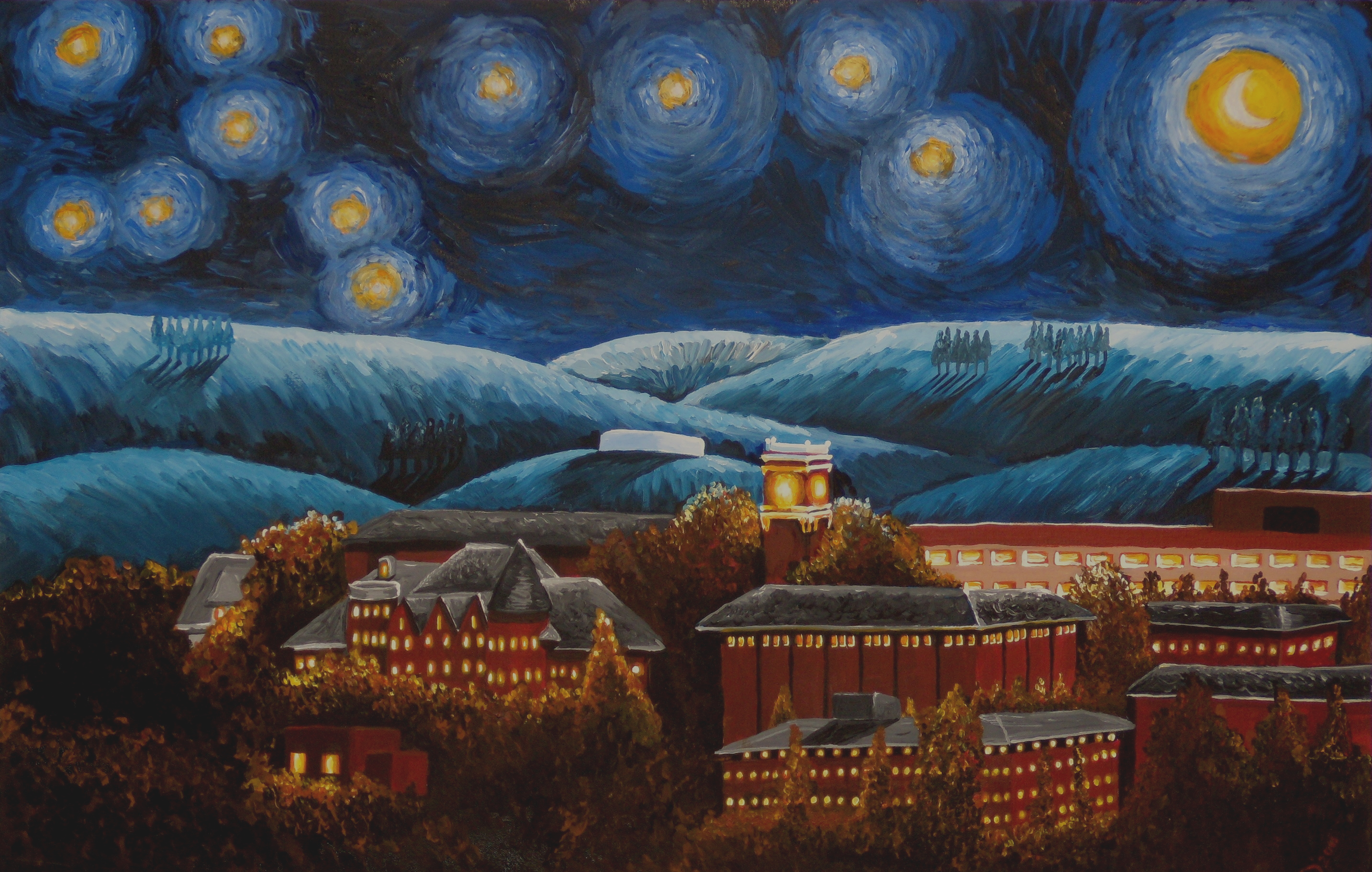
This was an extraordinary place, this rural university town where at one time the students outnumbered the towns people. A place where couples came to start and finish their Pullmanacademic careers. A place where their children went through school together. Where the twelve-year club was almost as big as the high school graduating class. Where for better or worse everyone knew everyone else and everyone else’s business. Where in the summer time the twenty six kids in our neighborhood roamed the streets, building forts in empty lots, scavenging parts for our go carts, and playing kick-the-can until long after dark. Where we never locked our doors.

It’s a nostalgic reality I step into every time I go home, most recently to settle my dad’s estate. The woman selling Dad’s house is a long time family friend, her parents and my parents used to go on Jazz cruises together, her younger brother and I were in the same high school graduating class. I remember her sister was a high school cheerleader. Such is the way of this village.

Walking into the retirement place to pick up Dad for lunch my sister and I encountered a man taking his mother grocery shopping. After a double take it was discovered this man and my sister were in the same class in high school. Such is the way of this village.

The couple buying Dad’s house are moving to town because he has accepted a position in the same department where my dad began his career. He was one of dad’s students. Such is the way of this village.

But I wonder if they will stay sixty years as Dad has, as so many did. To become truly part of this village, to be this village. Because most don’t anymore. They come and go, staying only a few years until the next career move.

And now, one by one, the village is vanishing.

Dubliner Cheese Please

The rising sun was breaking through the clouds. Finally. Jack and I were in his jewelry studio. I was putting together small boxes and he was casting a few more pieces for the Saturday market in Galway. We were listening to Irish talk radio.

The interview that morning was with a government official working with dairy exports. This man is responsible for getting Irish cheese, including my favorite Dubliner cheddar, to the US market. I moved my box assembly closer to the radio. Please don’t tell us that this increased market demand has compromised your standards or worse, that although the cheese carries the Dubliner label it is actually produced in Wisconsin.

In my early visits to Ireland I remember hearing great controversy around GMOs. Irish farmers were holding fast to a long tradition of natural farming practices and wereDairy-Cowsbeing very outspoken in their criticism of those considering the introduction of chemicals and factory farming. Free range pasture grazing was a source of pride. And, for the most part, pride won out. I didn’t want to hear this had changed and was greatly relieved to learn it hadn’t.

Dubliner Cheese is produced in County Cork. Not because labor prices are cheaper, or taxes are waived, or land prices are less but because the “temperate environment of this area ensures a long grass-growing season to produce high quality milk.” The cheese is produced by the Carbery Group but that’s all they do. The cows are raised and tended by 15,000 local farmers, according to the website. A huge number given that Ireland is just over half the size of Washington State. This system is a stand for sustainability, both of product quality and small family farms. While purchasing imported Dubliner Cheese is about as far from the buy-local ethic as you can get there is another ethic at play. The ethic of a community based food source deeply connected with the Earth.

Henry Can Wait

I stopped by to pick up Henry yesterday. He’s been gone almost two weeks and with our long-hair dogs and cat we are getting desperate for his return. Henry is our vacuum Henry Hoovercleaner. But he wasn’t ready.

It’s a small independent repair shop and Don, his eyes brimming with tears, told me he was behind on orders. His dad died yesterday. I don’t know Don beyond our sporadic vacuum cleaner encounters but as I hugged him he cried and and apologized that he was having trouble focusing on work. I suggested perhaps he should close the shop for a few days. But no, business must go on. He would call me when Henry was repaired, maybe even Saturday as he planned to work through the weekend to catch up. Business must go on. Such a common response in a culture where bereavement days are measured in single digits, counted on one hand.

Some years ago friends and I were visiting the small Irish village of Adara, birthplace of Donegal tweed. Our plans were to spend one night, wander the shops the next day and then head south to Sligo Town. But our plans changed when, at breakfast, our B&B host told us that a young man of the village, driving home after working a night shift, had fallen asleep and drifted over the center line. He was hit by a truck and killed instantly.

The entire village shut down. Schools and businesses closed for the day as everyone gathered at the church. We would have slipped quietly out of town but we had clothes to collect at the local laundry which would now not be open until the following morning.

This came back to me as I left the repair shop. Open. Business as usual. I had encouraged Don to take some time, told him that Henry can wait. Although I believe his heart heard the message I knew he would stay at work.

Guiding Lights

In long ago Ireland the homes were small. There were no spare bedrooms. Guests and travelers of all rank were offered lodging in a large house built expressly for hospitality. It was considered a privilege to be designated as the innkeeper and strong codes applied. One must be ready to receive guests at all times with a fire in the hearth, food for the table, and a lantern lit outside to guide travelers to the door. Breaking with any of these, or several other, codes would result in losing the innkeeper designation.

oichenolgPlacing a lighted candle in the window on Christmas eve is a symbol of welcome to Mary and Joseph as they travel looking for shelter, an Irish tradition still practiced today. During the Penal Times, when practicing the Catholic religion was punishable by death, a window candle also indicated a safe place for priests to conduct mass.

Guiding lights. On this Christmas eve may the light we hold within us guide our way to peace and love. For ourselves, our families and all people of the world.

Benbulben Speaks

Benbulben, the mountain in the above header photo, is an amazing power spot in Ireland, holding potent energy of Ireland’s spiritual ancestors, the Tuatha Dé Danann. That Benbulben speaks will not be news to anyone who has traveled to Ireland with me.

Now it seems this speaking will be more public. Continue reading

Winter Dancing In Bare Feet

For the Irish, winter has always been a time of gathering with family and friends around the hearth fire. Through Joe Neilan’s recollections, included in Joe McGowan’s book, Inishmurray; Island Voices, we can almost feel the heat of the fire and hear the music.

On a winters night we used to have a thundering big roaring fire. All the neighbors would gather into a different house every night and the’d start telling stories, singing songs, an’ reciting poems. The flute players’d be there an’ the fiddle. There’d be lilting and dancing. Someone would bring in the half door and the’d leave it down on the floor. You’d see an old woman coming in or an old man up to 70 or 80 years of age. The women in their bare feet, an’ they’d start step dancing an’ more of them lilting tunes along the fire, and singing, and the fiddle an’ the flute.

Then, after all the playin’ an’ dancin’, eveyone’d have a wee respite to draw their wind and the bottle’d go round till they all got a drink. Out of the drinking then they’d all start again. Everyone had to sing, and it was all the rale old Irish songs. Mostly in Irish the songs were sung. Out of the singing of the songs then they’d start storytelling. … One word used to borrow from another, one entertainment used to join another an it’d be two o’clock in the morning before the company’d break up, to make home for their own house.

Imagine. They had no money and no tradition of frenzied shopping or frantic holiday preparations. Their wealth was in community – and night after night after night of music and singing and dancing in bare feet.

We Always Need Each Other

Interesting. After writing yesterday about the gathering in Atlanta I received an email today from the folks who put on the event.

A few weeks ago, several elders from around the world gathered at Ancient Wisdom Rising in Atlanta. It was not business as usual. There was more urgency in how they spoke. Two main messages rang out loud and clear: only the heart will be able to guide us in the time that is coming…the mind will not have a clue. And the need for community. If you don’t have one, get one. If you have one, go deeper. We are going to need each other.

The email went on to ask for money, but this first paragraph caught my attention.

Yes, the elders did speak with urgency and concern about the state of our planet and people. And they spoke about the importance of community. But not from a perspective of needing to gear up for pending disaster. Water, check. Flashlights, check. Dried food, check. Community, check. It’s not that we are going to need community but that we have always needed community. Desmond Tutu and others have reminded us that for as long as memory the concept of I am because we are, has been embedded in the African people.

Being in right relationship with community is one of the three fundamental messages from Ireland’s indigenous spiritual ancestors. A message that is thousands of years old. A message that echoes through the rituals and traditions of this holiday season. Gathering with family and friends. Sharing stories around the fire. Celebrating. This is the light of community that feeds the soul. And for our Irish ancestors, hospitality wasn’t just a good idea, it was the law. Breaking the code of hospitality was as serious as stealing cattle.

Yes, community can be a messy business. Yet, as the elders and ancestors have always known, it is only through community that we thrive. Perhaps it’s less about community saving us than us saving community.